

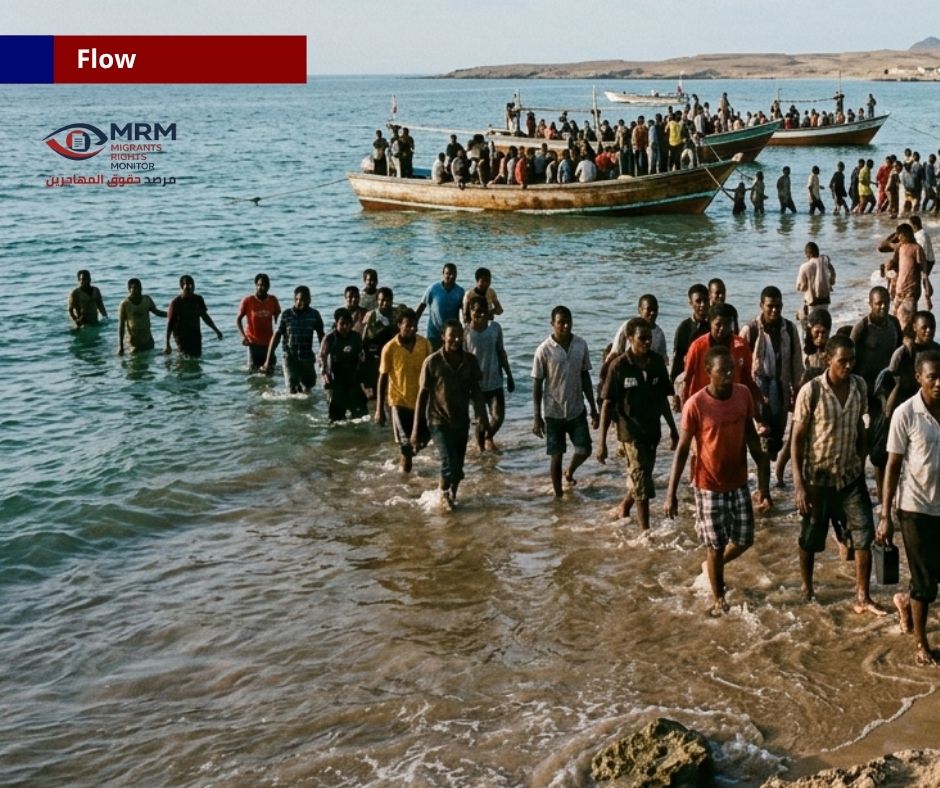
Recent data released by the International Organization for Migration indicate the continued flow of African migrants into Yemen during February 2026, despite the country’s complex humanitarian and security situation. Yemen remains one of the main migration routes from the Horn of Africa toward Gulf countries, despite ongoing conflict, economic collapse, and the absence of effective legal protection for migrants.
According to the organization’s data, 19,337 migrants entered Yemen in February 2026, representing a nine percent decrease compared to January, when 21,050 migrants arrived. Despite this decline, the figures still reflect the continued movement of thousands of migrants through dangerous sea and land routes in search of work opportunities or a better life.
The data show that Djibouti was the primary departure point for most migrants, accounting for around 71 percent of arrivals. Meanwhile, 28 percent came from Somalia, and about 2 percent arrived via Oman. Migrants departing from Djibouti mainly entered through Abyan Governorate, which received approximately 57 percent of total arrivals, followed by Taiz Governorate with 43 percent. Migrants from Somalia arrived in Shabwah Governorate, while 329 migrants were recorded arriving from Oman to the Shahin district in Al-Maharah Governorate.
These figures reveal notable shifts in migrant arrival routes along Yemen’s coastline, as areas such as Abyan and Taiz have increasingly become key reception points for migrants crossing the Red Sea and the Gulf of Aden, replacing areas that previously recorded higher inflows such as Shabwah and Lahj.
Demographically, the majority of migrants were men (63 percent), while women accounted for 18 percent and children for 19 percent. The relatively high proportion of unaccompanied children raises particular concern, as they face increased risks of exploitation, forced labor, and human trafficking.
Although these figures help explain migration patterns, they often focus mainly on numbers and routes without fully addressing the serious violations migrants face inside Yemen, particularly in the context of the ongoing armed conflict and the presence of multiple authorities controlling different areas of the country.
In areas controlled by Ansar Allah (Houthis), backed by Iran, Yemeni human rights organizations have documented numerous cases of arbitrary detention of migrants, as well as torture, ill-treatment, and financial extortion.
In areas controlled by the internationally recognized Yemeni government, Migrants Rights Monitor has reported ongoing arbitrary detention practices against migrants arriving in coastal cities in southern Yemen, in addition to forced evictions that leave many migrants displaced and without shelter.
Along Yemen’s northern border, migrants face additional danger when attempting to cross into Saudi Arabia. Human rights reports have documented the use of lethal force by the Saudi Border Guard against migrants attempting to cross the border.
Aziz Ibrahim, a researcher and communications officer at MRM said:
“The migration route through Yemen has become one of the most dangerous in the world. African migrants face multiple violations from different parties to the conflict while lacking even the most basic legal protection. Continued impunity only deepens the suffering of migrants, particularly women and children.”
Migrant women face particularly severe risks along the route, including sexual violence and exploitation by smuggling networks and other actors.
Meanwhile, unaccompanied children face serious dangers throughout the journey, often becoming vulnerable targets for trafficking networks or forced labor.
At the same time, data from the International Organization for Migration show continued reverse migration, with 1,590 migrants leaving Yemen in February 2026. Most departed from Lahj Governorate toward Obock in Djibouti, while others traveled from Al-Maharah Governorate toward Oman.
Source:
IOM’s Flow Monitoring Registry (FMR) regarding migrant flows to Yemen during February 2026.




Leave a Reply