Yemen is considered one of the most dangerous transit countries for African migrants arriving from the Horn of Africa. This danger increases dramatically in areas controlled by (Houthis) backed by Iran, where migration routes have been transformed into open spaces for systematic and grave human rights violations. Instead of being treated as a humanitarian issue requiring protection, migrants have become targets of exploitation, repression, and abuse—used as sources of income, instruments of coercion, and fuel for a war economy built on extortion and human trafficking.
Field evidence and documented testimonies indicate that African migrants entering Houthi-controlled areas are subjected to recurring patterns of killing, arbitrary detention, physical and psychological torture, sexual violence, forced labor, and forced displacement, all in the absence of legal safeguards or independent judicial oversight.
Detention as a Tool of Extortion and Torture
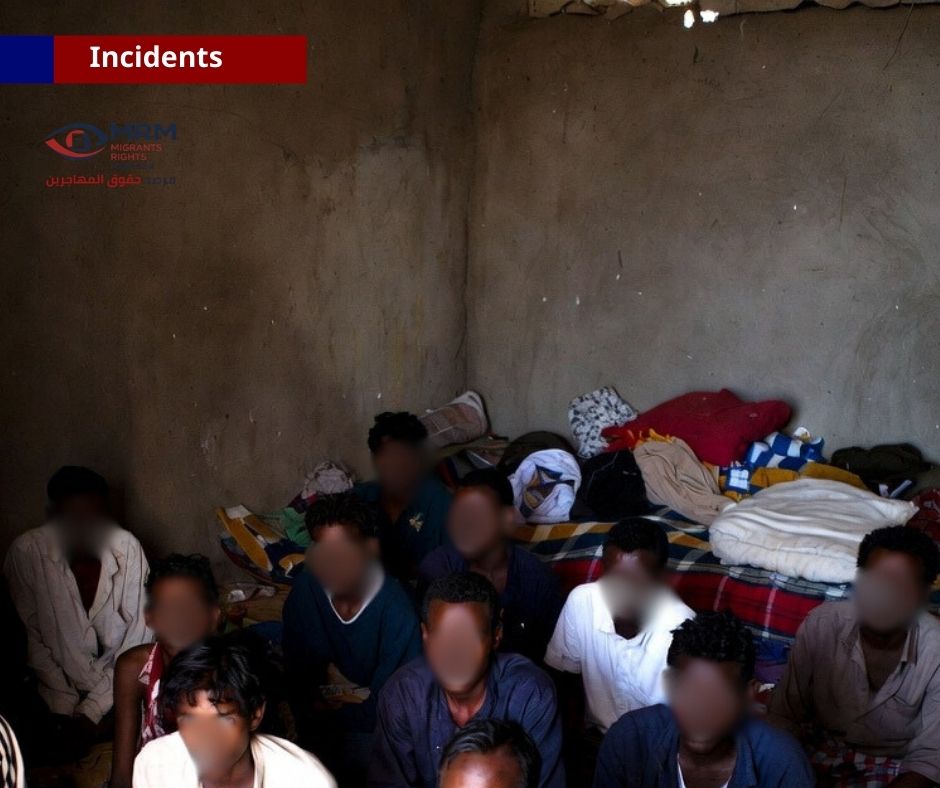
The Houthis rely heavily on mass detention of African migrants as a primary mechanism of control and financial extortion. Migrants are routinely arrested at checkpoints, on roads, and in gathering areas, particularly in Sana’a, Sa’dah, and Amran. These arrests are carried out without legal basis, formal charges, or access to legal or humanitarian assistance.
Inside detention centers, migrants endure cruel and degrading treatment, including severe beatings with sticks, electric cables, and rifle butts, as well as deprivation of food and water, extreme overcrowding, and the spread of infectious diseases. Torture is frequently used to force detainees to pay ransom for their release or to contact their families in countries of origin or destination to send money.
One Ethiopian migrant detained in Sana’a described the abuse as follows:
“They beat us continuously, then took our phones and forced us to call our families. Those who paid were released; those who had no money remained detained and were beaten even more.”
Testimonies suggest that ransom amounts are arbitrary and discriminatory, based on physical condition, ability to speak Arabic, or even outward appearance—reflecting deliberate humiliation and exploitation.
The Sana’a Tragedy: One of the Worst Crimes Against Migrants
The incident at the Immigration and Passports Detention Center in Al-Sabeen District, Sana’a, represents one of the most horrific crimes committed against African migrants in Yemen’s recent history. In March 2021, during a peaceful protest by detainees who went on hunger strike to demand improved conditions, Houthi forces violently suppressed the protest.
According to survivor testimonies, projectiles were fired into an overcrowded detention hall while the doors were tightly sealed, triggering a massive fire and heavy smoke. The incident resulted in the deaths of more than 40 migrants and injuries to approximately 170 others due to burns, suffocation, and gunshot wounds.
The Yemeni human rights organization Mwatana for Human Rights documented the incident as a serious violation of international human rights law, concluding that it was not accidental but rather the direct result of excessive use of force in a confined detention facility, combined with preventing detainees from escaping and firing live ammunition at those attempting to survive.
One survivor recalled:
“The smoke filled the room. We were screaming and banging on the doors, but no one opened them. I heard my friends dying one by one, and I could do nothing to help.”
Sa’dah: Mass Detention, Forced Labor, and Recruitment
In Sa’dah Governorate, violations are more systematic and widespread. The Houthis use security camps and military facilities—such as the Central Security Camp and Al-Najda Forces—as detention centers for African migrants. Large numbers, including women and children, are held in inhumane conditions, with no access granted to independent monitoring organizations.
Beyond detention, migrants are subjected to forced labor and recruitment. Numerous testimonies confirm that African migrants have been coerced into joining frontlines or performing military support tasks such as digging trenches and transporting supplies, under threat of death or prolonged detention. Their extreme poverty and vulnerability are deliberately exploited to force participation in the armed conflict.
Migrant Women: Compounded Violence
Female migrants face compounded violations that combine gender-based violence with abuses linked to their migration status. These include sexual harassment, rape, detention in mixed-gender facilities, lack of privacy, and denial of healthcare.
One documented case involves the recruitment of an underage Ethiopian girl, who was trained to use weapons and deployed as a guard in a migrant detention facility—constituting a grave violation of the Convention on the Rights of the Child and international humanitarian law. Other survivors reported routine harassment by security personnel and male detainees inside severely overcrowded facilities.
One woman stated:
“There was no safe place. The cells were overcrowded, there was no separation between men and women, and harassment was constant.”
Smuggling Networks: A Partnership in Crime
Evidence strongly indicates collusion between the Houthis and human smuggling and trafficking networks. These networks operate freely in Houthi-controlled areas in exchange for payments at checkpoints, often amounting to hundreds of Saudi riyals per migrant.
Smugglers perpetrate severe abuses, including confinement in dark rooms, starvation, torture, killing, and transport in overcrowded vehicles at dangerous speeds across desert routes—leading to deaths from accidents or shelling. Migrants unable to pay are frequently handed over to Houthi authorities, where the cycle of detention and extortion begins again.
Forced Transfers: Organized Violence
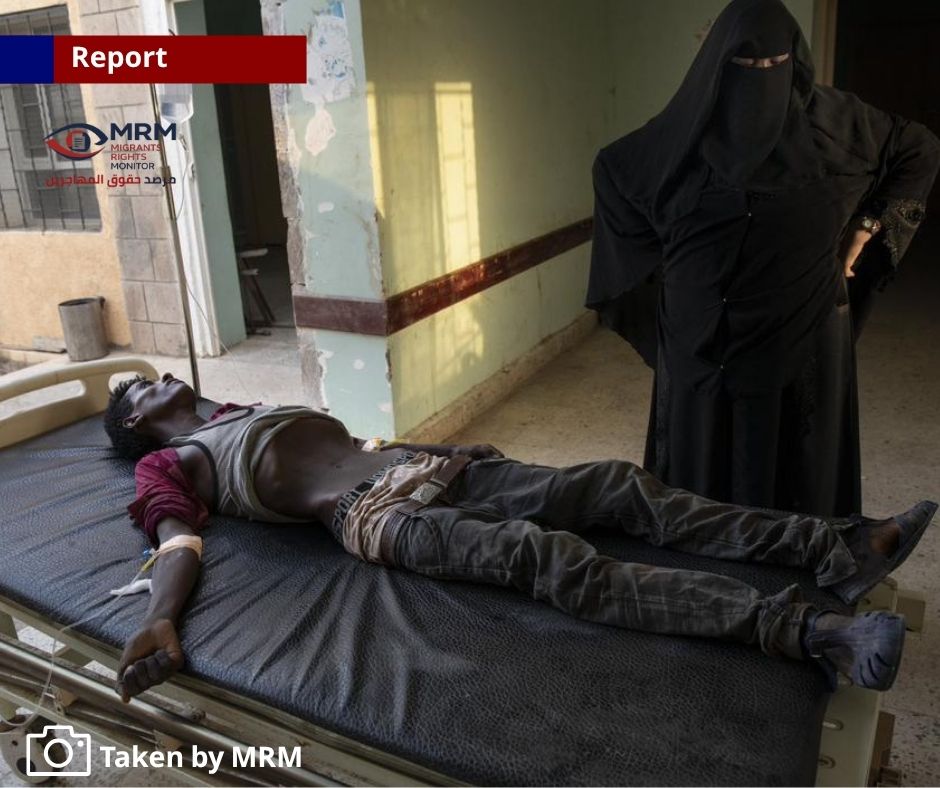
As part of forced transfer policies, the Houthis transport African migrants in overcrowded trucks from Sa’dah to Sana’a and onward to southern governorates such as Lahj, across distances reaching hundreds of kilometers, without providing water, food, or medical care. Many migrants arrive in critical health conditions, some suffering from gunshot wounds or infectious diseases.
The violations endured by African migrants in areas controlled by Ansar Allah (Houthis) cannot be regarded as isolated incidents or individual misconduct. Rather, they constitute a systematic pattern of grave human rights abuses, closely linked to the war economy and sustained through detention, extortion, forced labor, and collusion with human trafficking networks.
These findings underscore the urgent need for:
an independent and transparent international investigation, accountability and an end to impunity, and immediate protection for African migrants in Yemen—one of the most vulnerable groups along migration routes—while ensuring they are no longer exploited as tools of repression or sources of revenue in a protracted armed conflict


Leave a Reply