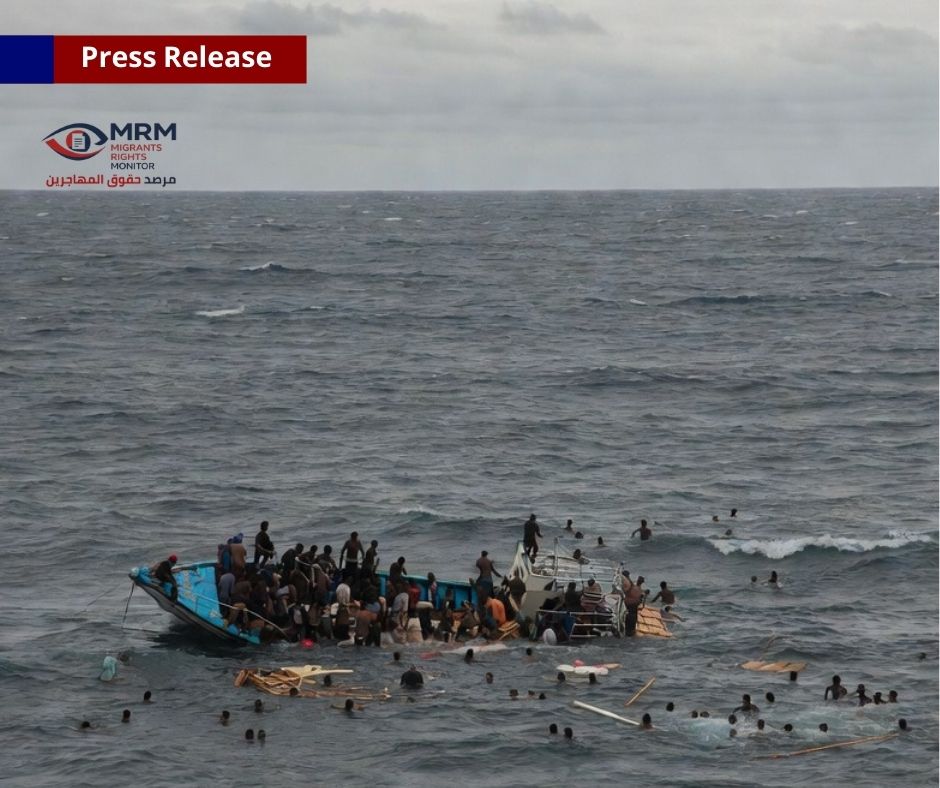
Migrant Rights Monitor (MRM) has documented a tragic boat capsizing off the coast of Yemen’s Shabwah governorate on the evening of Wednesday, March 11, 2026. This latest disaster underscores the escalating perils faced by African migrants navigating the hazardous sea route to Yemen.
According to information gathered by MRM based on eyewitness testimonies, a migrant smuggling boat capsized at approximately 9:00 p.m. near Al-Qamari area in Radum district, Shabwah governorate. The vessel was reportedly carrying around 270 migrants, including women and children.
Witnesses reported that the boat had departed from the port of Bosaso in Somalia and was operated by smugglers of Somali and Yemeni nationalities. The vessel capsized due to strong winds and high waves while attempting to approach the Yemeni coast during nighttime.
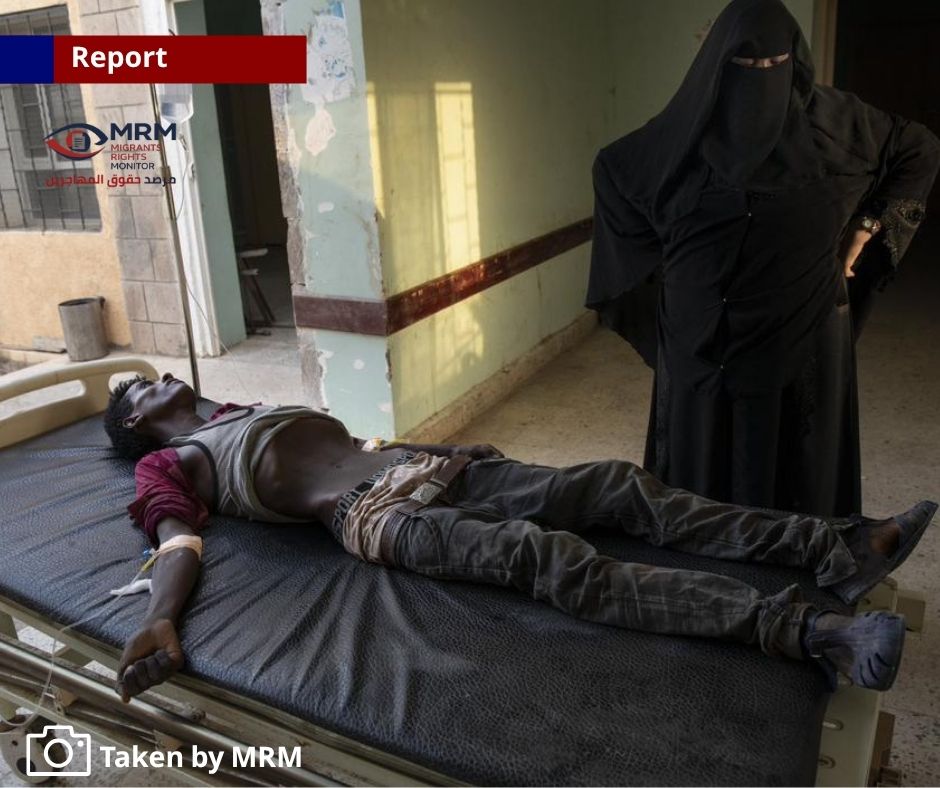
The incident resulted in the death of ten migrants, including three men and seven women, among them a six-year-old girl. Local residents from the area reportedly assisted, alongside members of the smuggling network, in rescuing survivors and retrieving bodies from the water.
However, eyewitnesses also stated that smuggling groups took custody of the bodies of the deceased after they were recovered, raising serious concerns that the remains could be hidden or buried to conceal the scale of the tragedy. Similar practices have been documented in previous incidents as a way for smuggling networks to avoid scrutiny and accountability.
Witnesses further noted that the smugglers chose to travel during nighttime despite severe weather conditions and high waves, suggesting that they were aware of the dangers associated with sailing at that time. This places significant responsibility on the smugglers for exposing migrants to life-threatening risks.
Rising Shipwrecks Along Yemen’s Southern Coast
This tragedy comes amid a growing pattern of migrant shipwrecks along Yemen’s coastline, which has become one of the most dangerous maritime migration routes in the region.
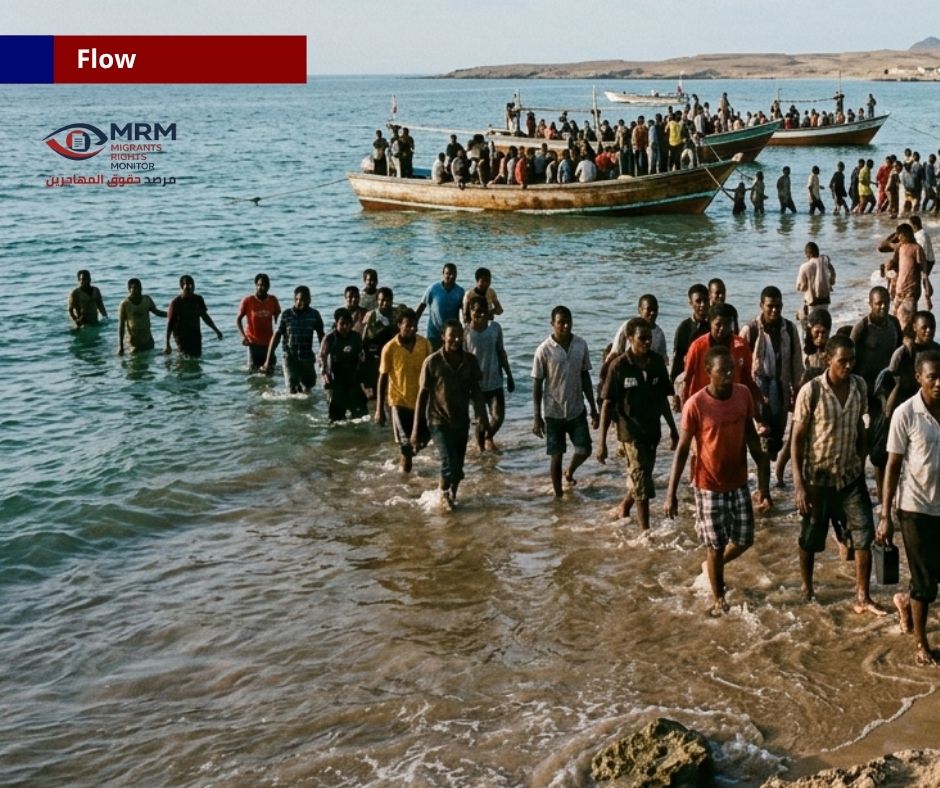
Over the past decade, and amid Yemen’s ongoing armed conflict and institutional fragility, the coastal stretch from Abyan to Shabwah governorates has become a primary arrival point for migrant smuggling boats coming from the Horn of Africa. As these routes expanded, deadly shipwrecks have also increased, often caused by overcrowded vessels and dangerous sea conditions.
In June 2024, a boat carrying about 260 Somali and Ethiopian migrants capsized near the coast of Shabwah, resulting in the death of more than 49 migrants and dozens reported missing. In July of the same year, another tragedy occurred off the coast of Taiz governorate when a boat carrying asylum seekers overturned due to overcrowding and strong winds, leaving only a handful of survivors.
Similarly, in August 2025, more than 50 African migrants died after a boat carrying around 150 people capsized in the Arabian Sea near Ahwar district in Abyan governorate.
These repeated incidents demonstrate a systematic and ongoing risk faced by migrants attempting to cross the sea in unsafe conditions.
Smuggling Networks Operating with Near Impunity
Migrant Rights Monitor stresses that human smuggling networks bear primary responsibility for these tragedies, as they routinely transport migrants in dilapidated fishing boats unfit for long maritime journeys, often overloaded far beyond their capacity.
These networks frequently operate with near total impunity, allowing them to continue their dangerous activities that place thousands of migrants’ lives at risk.
Field testimonies also indicate that some smuggling groups attempt to conceal evidence after shipwrecks occur, including secretly burying victims or hiding bodies to avoid accountability or reduce public attention to the scale of the disaster.
Urgent Call for Rescue Capacity and Medical Response
In light of these developments, the Migrant Rights Monitor calls for the establishment of specialized maritime rescue teams along Yemen’s coastline, led by international organizations in coordination with local authorities, and equipped with rescue boats, first-aid equipment, and communication tools to enable rapid response during maritime emergencies.
MRM also stresses the urgent need to establish health centers and emergency first-aid facilities in high-risk coastal areas to provide immediate medical care to survivors of maritime disasters.
Ali Mayas, Founder of the Migrant Rights Monitor, stated:
“The repeated shipwrecks of migrants off Yemen’s coasts highlight the urgent need to establish health centers and emergency first-aid facilities in high-risk coastal areas, particularly in districts such as Radum in Shabwah, Ahwar in Abyan, Al-Makha in Taiz, and Al-Mudharabah and Ras Al-Ara in Lahj. The presence of rapid medical and rescue response points in these locations could mean the difference between life and death for survivors of maritime disasters.”
MRM emphasizes that the continued recurrence of these tragedies reflects a serious gap in protection and emergency response mechanisms, and underscores the urgent need for international organizations and donor states to strengthen preparedness and lifesaving capacities along Yemen’s coastline.
Ultimately, the repeated shipwreck disasters off Yemen’s shores demand urgent international action to combat human smuggling networks, strengthen rescue and emergency response systems, and ensure protection for migrants risking their lives along one of the world’s most dangerous migration routes.


Leave a Reply