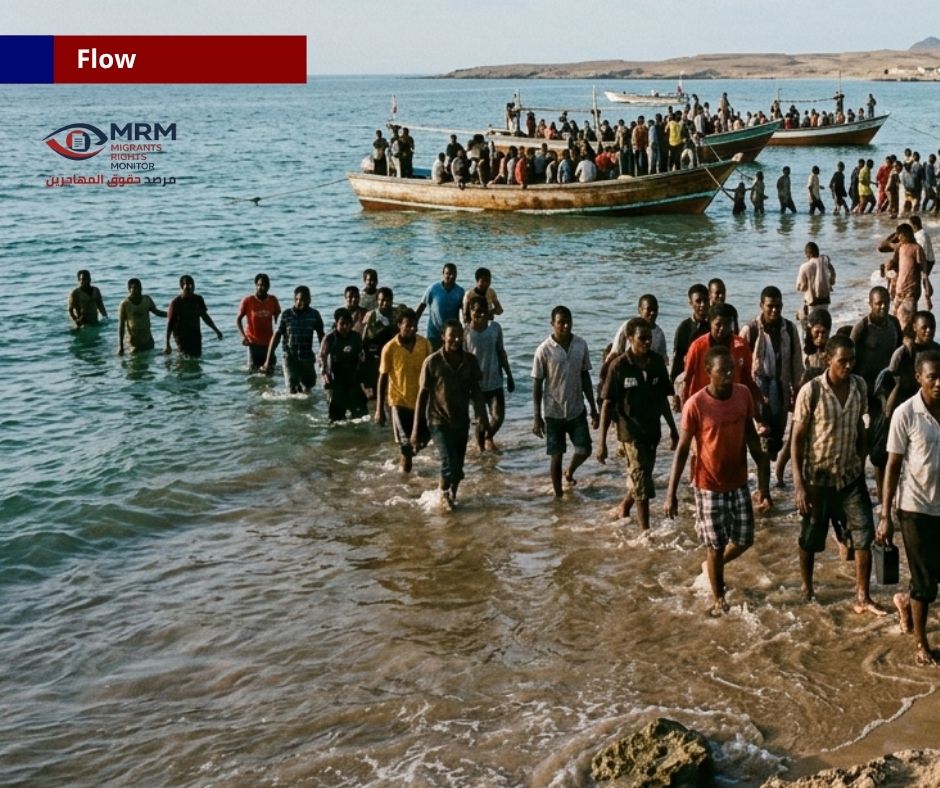
Amid Yemen’s ongoing complex humanitarian crisis, the International Organization for Migration continues to monitor migrant movements through its Flow Monitoring Registry (FMR), which provides critical data on irregular migration routes and drivers. The latest data from March 2026 reveals an alarming reality facing migrants—particularly those from the Horn of Africa—within a context shaped by armed conflict, economic collapse, and climate-related disasters, alongside notable shifts in smuggling routes and entry points.
According to the data, 17,027 migrants entered Yemen in March 2026, marking a 12 percent decrease compared to February, when 19,337 migrants were recorded. Despite this relative decline, the figures remain high, confirming Yemen’s continued role as a key transit route for irregular migration toward Gulf countries. The data indicates that 74 percent of migrants departed from Djibouti, followed by Somalia at 22 percent, and Oman at 4 percent.
A significant shift in arrival geography is evident, with Abyan governorate emerging as the primary entry point for migrants arriving from Djibouti, accounting for 72 percent of arrivals, surpassing other governorates such as Ta’iz, which recorded 28 percent. Meanwhile, migrants departing from Somalia continued to arrive through Shabwah governorate, while 595 migrants entered via Oman through the Shahin district in Al Maharah governorate. This shift reflects evolving smuggling patterns, as trafficking networks increasingly redirect routes toward areas with weak or absent security oversight, facilitating irregular landings while exposing migrants to greater risks of exploitation.
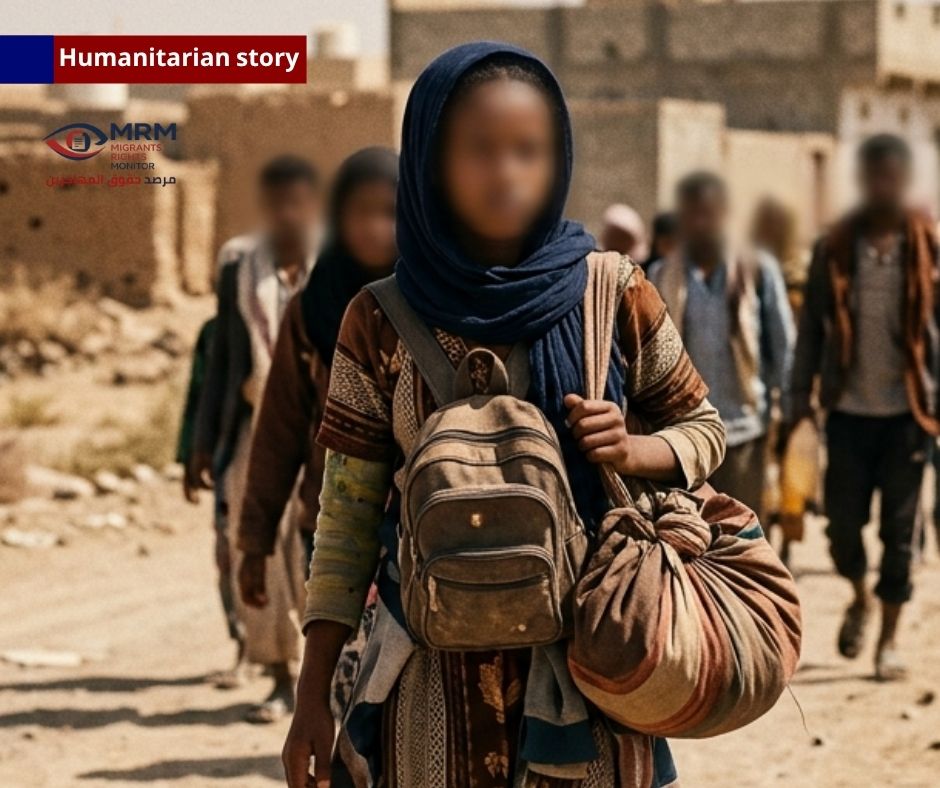
The data also shows that 68 percent of migrants are men, while women and children each constitute 16 percent of the total. This highlights the growing vulnerability of these groups, particularly women and children, in an environment lacking even minimal protection. In contrast, 1,407 migrants were recorded leaving Yemen during the same period, most of whom departed to Djibouti via Lahj governorate, with a smaller number departing from Abyan.
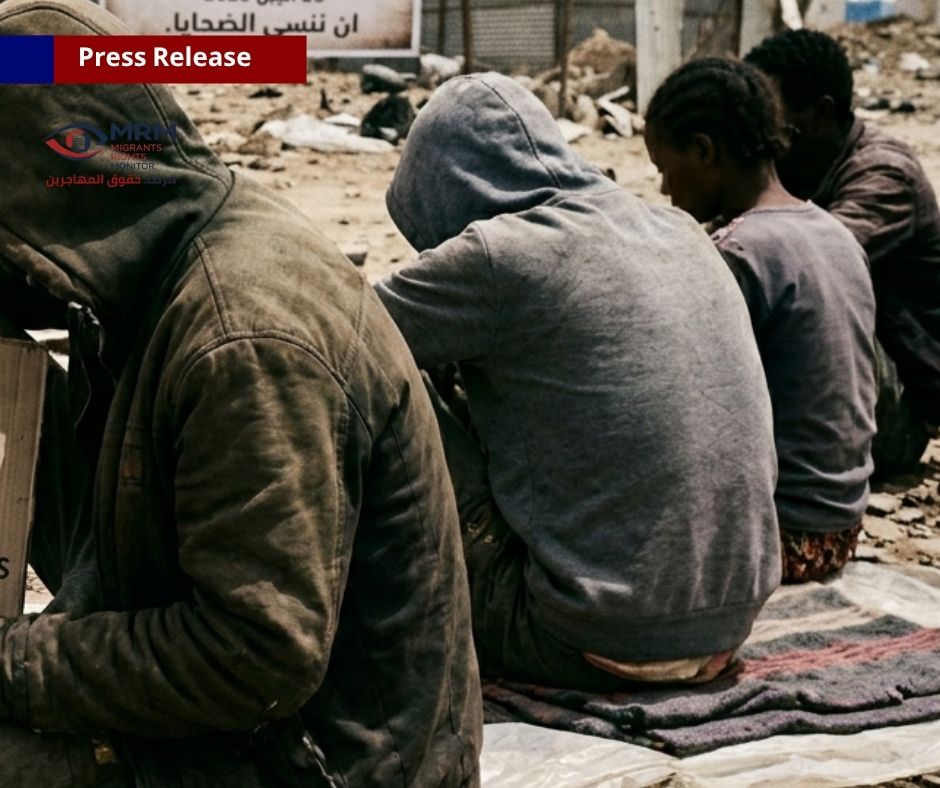
These figures alone do not capture the full extent of the suffering endured by African migrants in Yemen. Most of these individuals, primarily from Ethiopia and Somalia, face a continuum of severe abuses from the moment they leave their countries of origin until they reach Yemeni territory. Within the context of ongoing conflict, migrants are subjected to violations by parties to the war, including the Iran-backed Houthi group, internationally recognized government forces, and affiliated military units. Documented abuses include arbitrary detention, torture, extortion, restrictions on movement, and forced labor, reflecting a serious absence of accountability and legal protection.
Smuggling and human trafficking networks pose an additional and immediate threat to migrants’ lives. These networks exploit shifting migration routes—particularly in areas such as Abyan and Shabwah—to expand their operations beyond effective oversight. Migrants are frequently held in inhumane conditions, subjected to financial extortion, forced labor, and physical and sexual violence, in a context marked by widespread impunity.
Migrant Rights Monitor (MRM) calls on the international community to uphold its moral and legal responsibilities toward this overlooked population by ensuring the inclusion of migrants in humanitarian response plans, exerting pressure on all parties to the conflict to end abuses and comply with international humanitarian law, strengthening efforts to combat smuggling and trafficking networks, and supporting the creation of safe and legal migration pathways to reduce reliance on dangerous routes and better protect migrants’ lives and dignity.
The continued arrival of thousands of migrants to Yemen despite escalating risks, alongside the redirection of smuggling routes toward less regulated areas, reflects not only the deep crises in countries of origin but also the growing complexity of the situation within Yemen. African migrants in Yemen are not merely statistics; they are victims of intersecting crises and systemic abuses, underscoring the urgent need for serious and immediate action to end this ongoing suffering.


Leave a Reply