
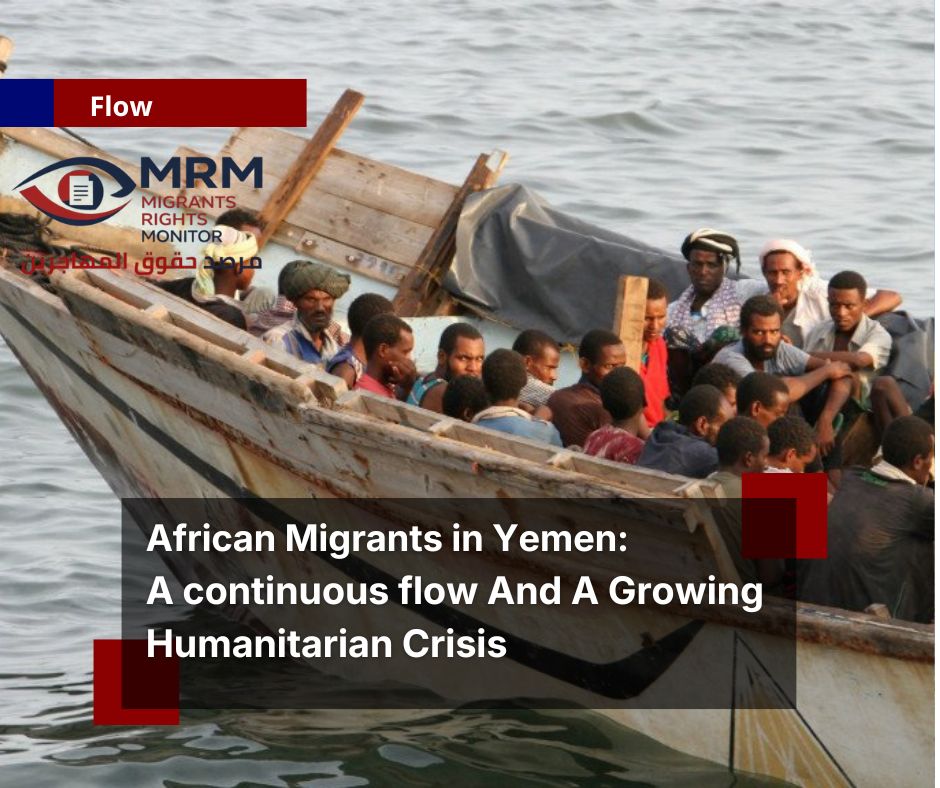
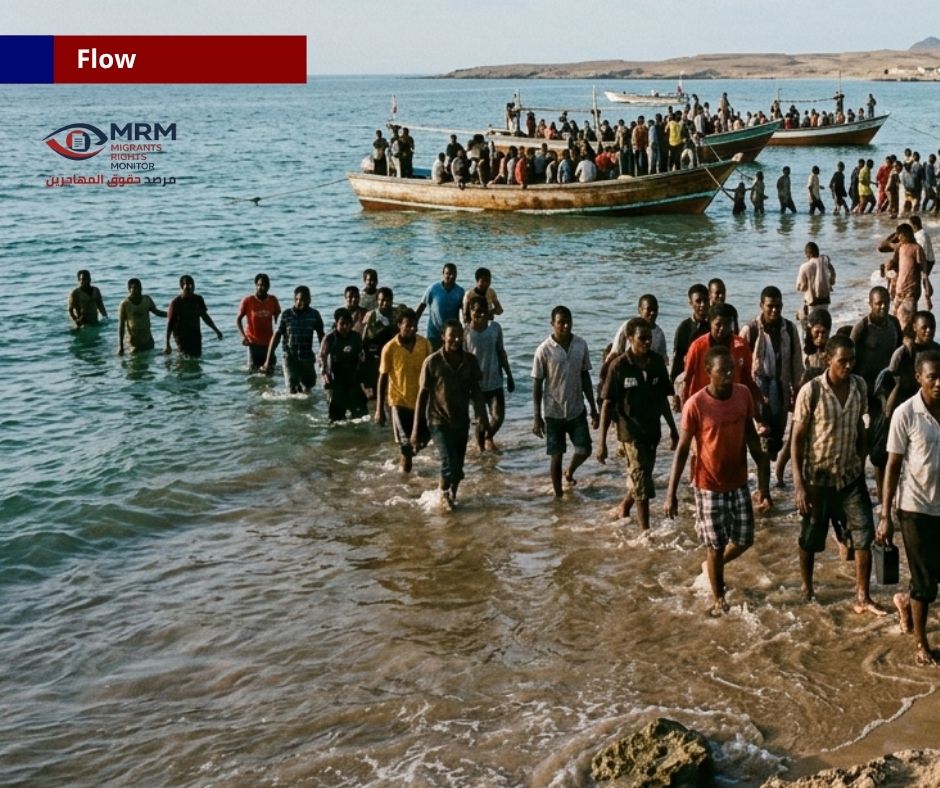
Yemen continues to serve as a critical transit route for African migrants fleeing conflict, poverty, and instability in the Horn of Africa. According to the IOM Yemen Displacement Tracking Matrix (DTM), in December 2025, 21,996 migrants entered Yemen, an increase from 17,659 in November. The primary departure point was Djibouti (80%), followed by Somalia (18%) and Oman (2%). Most arrivals from Djibouti entered through Dhubab district in Ta’iz governorate, while Ahwar district in Abyan received the next largest share. Somali migrants mainly arrived in Rudum district of Shabwah, and 375 migrants from Oman landed in Shahin district of Al Maharah. The flow was predominantly male, with 60% men, 17% women, and 23% children, while 2,034 migrants departed Yemen, mainly to Obock, Djibouti, from Lahj and Ta’iz, and others from Al Maharah to Oman.
While these official figures provide a snapshot of the crisis, analyzing local dynamics reveals deeper complexities. Smuggling and human trafficking networks are particularly active in coastal districts along the Bab al-Mandab corridor, including Dhubab in Ta’iz, Al-Mudharabah and Ras al-Ara districts in Lahj, Alongside the Arabian Sea coast corridor in southern Yemen, in Ahwar in (Abyan)and Rudum (Shabwah). These networks exploit vulnerable migrants, charging high fees for dangerous crossings and exposing them to violence and abuse.
Intensified patrols and anti-smuggling operations by the internationally recognized government and the Southern Giants Forces have targeted these networks, particularly in Al-Mudharabah and Ras al-Ara (Lahj) and Rudum (Shabwah). While these operations aim to curb irregular migration, they appear to have influenced a shift in arrival points, with more migrants now entering through Dhubab in Taiz Governorate instead of Ras al-Ara and Al-Mudharabah in Lahj Governorate, and in Ahwar in Abyan Governorate instead of Radhum in Shabwa Governorate.. Such shifts illustrate the interaction between adaptive smuggling networks and enforcement measures, highlighting how security operations shape migration flows on the ground.
However, reports indicate that these same operations have also been linked to widespread human rights violations against African migrants. Throughout 2025, migrants faced arbitrary detention, forced displacement, and collective punishment, particularly in Ras al-Ara and Al-Mudharabah in Lahj, and Rudum in Shabwah. Many were held without due process, subjected to harsh conditions, and relocated involuntarily, compounding their vulnerability along the migration corridor.
The combined effect of conflict, fragile governance, and the presence of smuggling networks leaves migrants extremely exposed. Local communities in Aden, Lahj, Abyan, Shabwa, Marib, Al Jawf, Saada, and Al Mahrahoften struggle to provide shelter, healthcare, and protection, with minimal resources. Humanitarian actors, working under these conditions, face immense challenges in delivering lifesaving support.
The international community must urgently respond to this underfunded and underreported crisis. Donor governments, UN agencies, and NGOs should increase support for humanitarian operations, strengthen protection for migrants, assist local authorities in safe reception, and ensure the safety of aid workers. Coordinated efforts are also needed to provide safe and voluntary options for onward movement, while addressing root causes of irregular migration.
The plight of African migrants in Yemen illustrates a growing humanitarian and migration crisis, where smuggling networks, conflict, and limited international support intersect. Yemen’s migrants, particularly women and children, cannot endure this burden alone. Global solidarity, protection, and adequate humanitarian assistance are urgent moral and operational imperatives.


Leave a Reply