
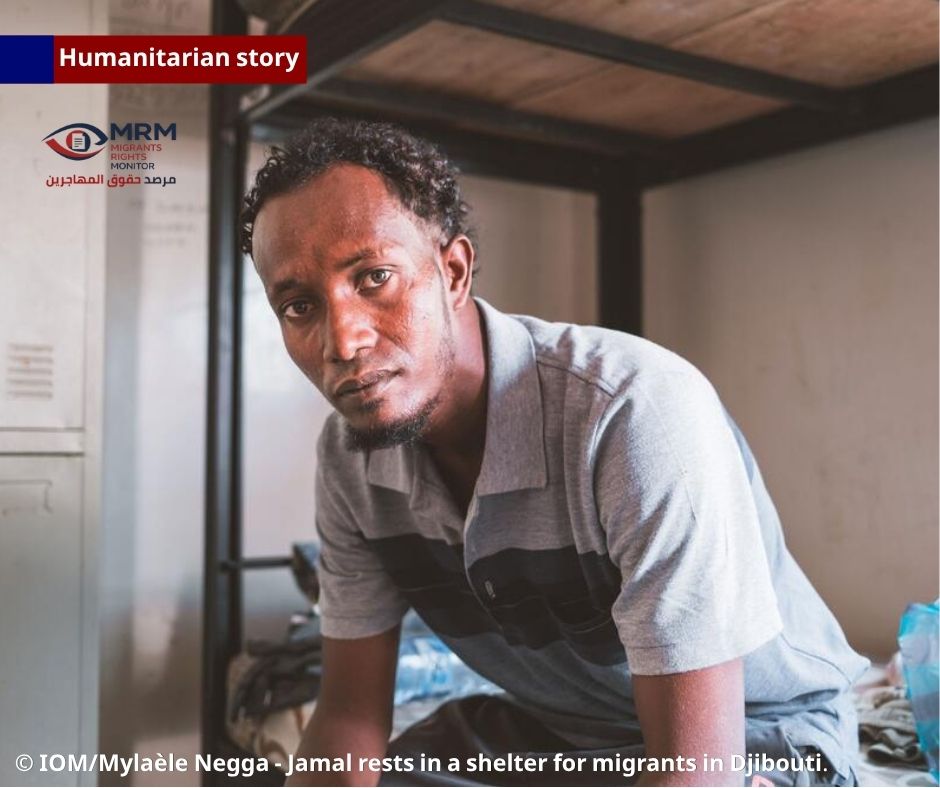
Jamal, an Ethiopian man in his early thirties, was not searching for a job or a better life when he decided to take the migration route known as the “Eastern Route.” He was not driven by dreams of wealth or an escape from poverty. Instead, he had one goal: to find his sixteen-year-old nephew, who had disappeared while attempting to reach Saudi Arabia through Yemen—one of the most dangerous migration routes in the world.
Jamal says: “I had no choice… my brother had no other children, and I had to go after him.” With these words, he began a journey that would soon turn into one of the harshest human experiences anyone could endure.
In Yemen, where migrant routes intersect with smuggling and human trafficking networks, Jamal deliberately placed himself in the path of traffickers, hoping they would lead him to where his nephew was being held. His plan worked. He found him—but pretended not to recognize him to avoid raising suspicion. During his captivity, Jamal tried to help others escape while secretly planning his own escape with his nephew.
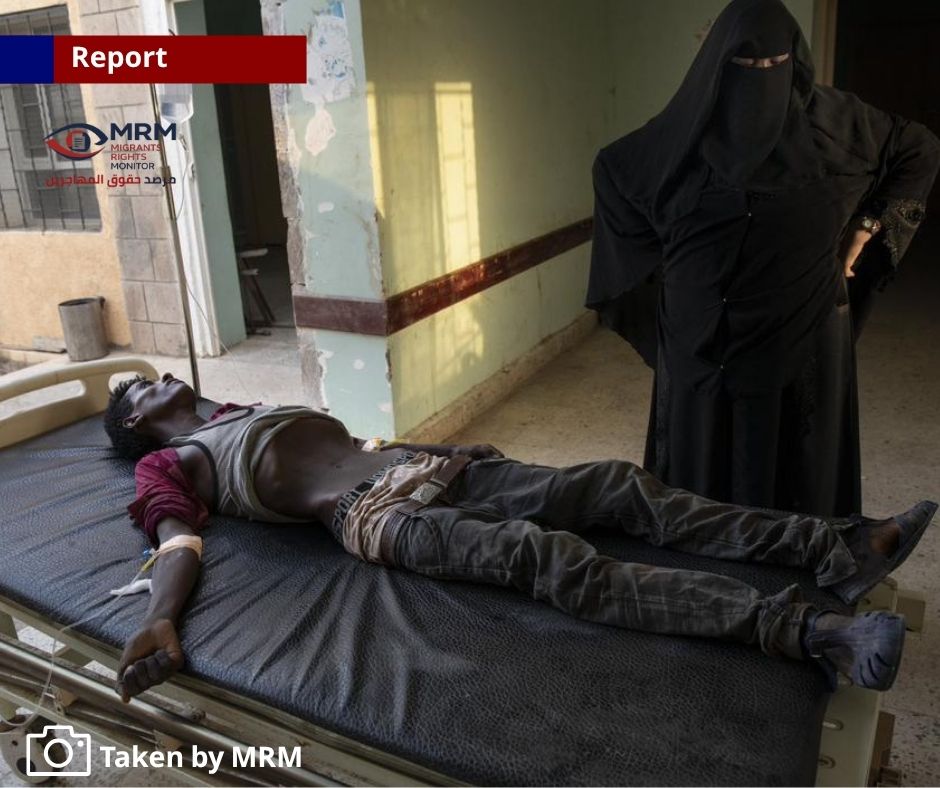
But his attempt did not go unpunished. Jamal recalls: “They forced me to watch others being tortured… they beat and burned them in front of us.” Then it was his turn. The smugglers wrapped his feet in plastic and set them on fire repeatedly, leaving permanent physical and psychological scars.
Their escape only became possible when clashes broke out between rival trafficking groups. Amid the chaos, Jamal and his nephew managed to flee. But survival did not come easily. He spent months in Yemen, working washing cars just to earn enough money to continue the journey, in a country torn by war where migrants are left without protection.
Jamal says: “I was living day by day… just trying to survive.”
Eventually, he managed to reach Djibouti, where he received medical treatment and psychological support. For the first time since his ordeal began, he felt that someone cared—not just about where he came from, but about what he had been through.
Jamal’s story is not an exception. It reflects the reality of thousands of African migrants who cross Yemen every year. It is a story of a dangerous route where journeys turn into daily struggles for survival, in the face of violence, exploitation, and abandonment.
Despite everything he endured, Jamal’s greatest concern remains his mother. He says: “She saw me leave in good health… I’m afraid of how she will see me now. I will have to explain it to her gently.”
In Jamal’s story lies the essence of the entire migration route: a journey that begins with hope, but too often ends in pain.
The source:
Kidnapped and tortured on an infamous migration route to Saudi Arabia



Leave a Reply