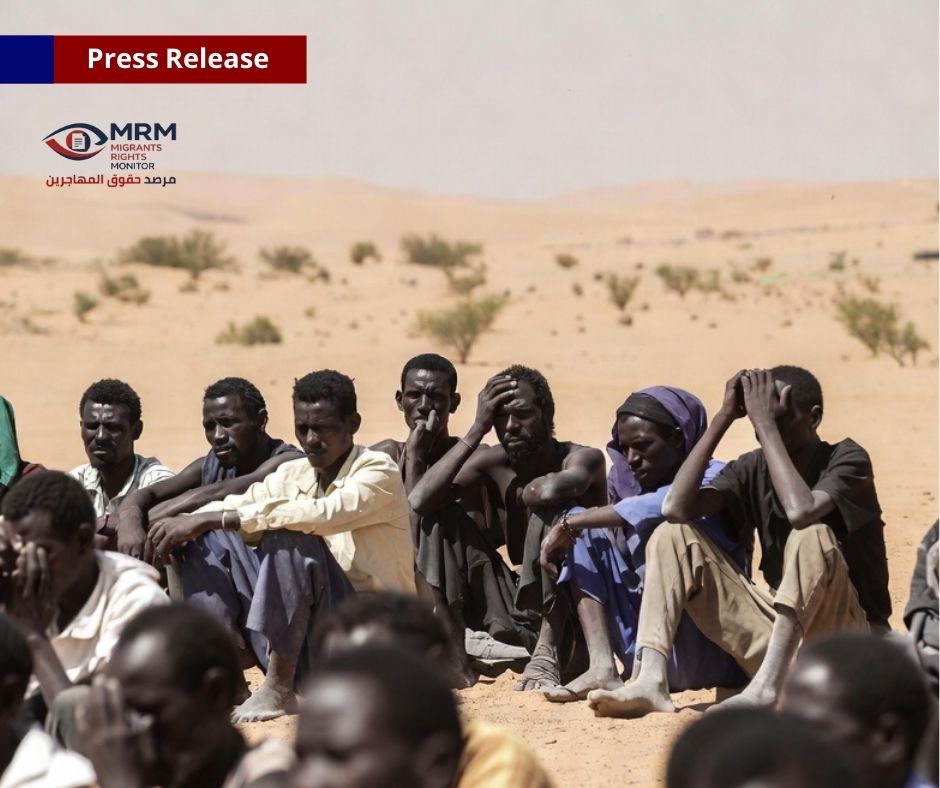
Migrants Rights Monitor (MRM) expresses deep concern over the ongoing grave violations faced by African migrants, particularly women, along the migration route from the Horn of Africa to Yemen, amid a worsening humanitarian crisis and a severe lack of international funding and response.
This statement follows the announcement by the International Organization for Migration on 18 February 2026 of a USD 91 million humanitarian appeal under the 2026 Regional Migrant Response Plan (MRP), to support migrants along major migration routes in Africa, with a particular focus on the eastern route leading to Yemen.
1. The Migration Route to Yemen: A Path of Violations, Not Protection
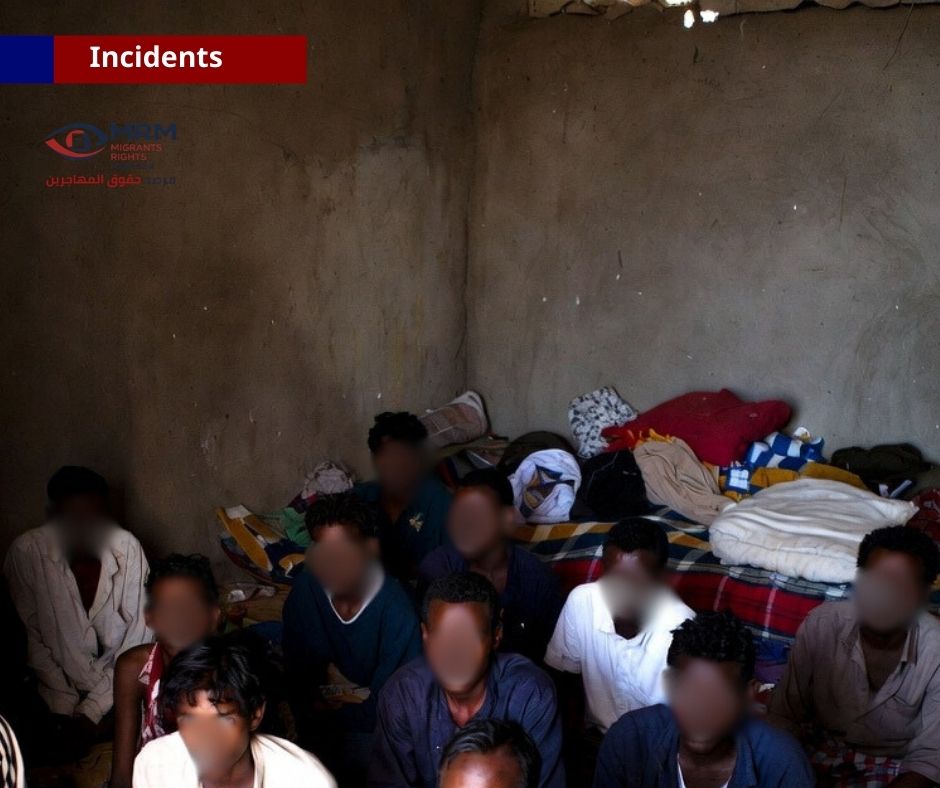
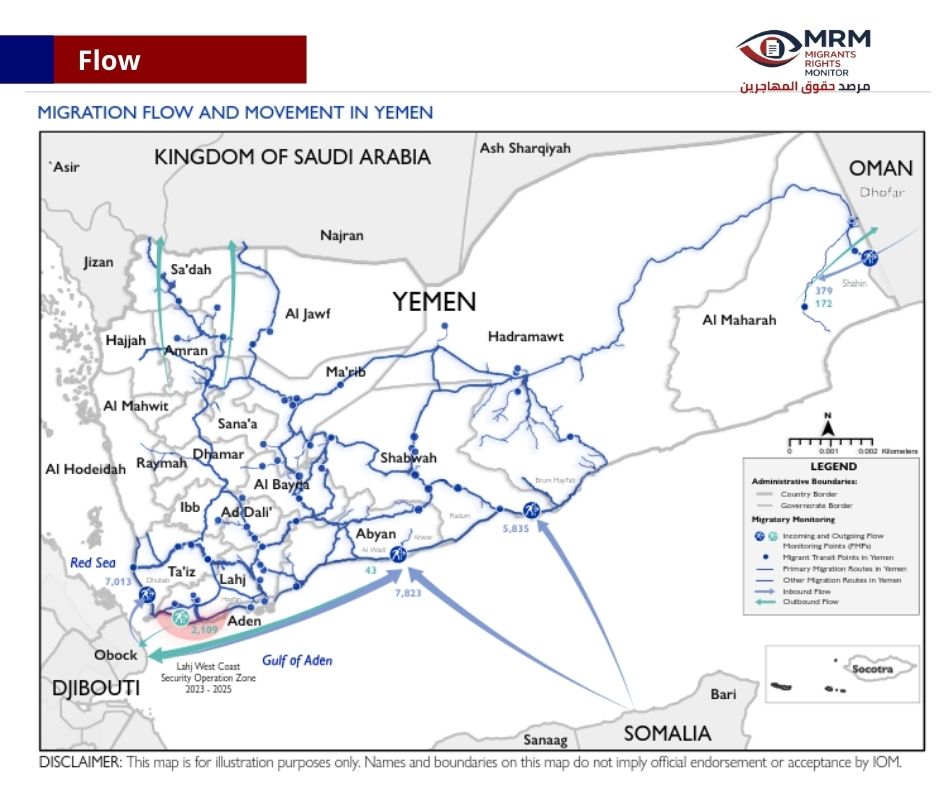
Thousands of migrants travel annually from Ethiopia and Somalia, through Djibouti to Yemen, fleeing poverty, conflict, and lack of opportunities. Yet this route has become one of the world’s most dangerous, exposing migrants to physical violence, sexual exploitation, human trafficking, hunger, arbitrary detention, and the deprivation of basic human rights.
IOM Director General Amy Pope emphasized:
“Migration along these routes is a shared responsibility. The 2026 Migrant Response Plan brings governments and partners together to protect people on the move and support host communities under pressure.”
The statistics underline the severity of the crisis: in 2025 alone, over 900 migrants died or went missing on the eastern route to Yemen, marking the deadliest year on record. Despite this, the suffering of African migrants in Yemen remains largely absent from international attention, both in terms of media coverage and the humanitarian funding allocated.
2. Migrant Women: Double Vulnerability and Systematic Violations
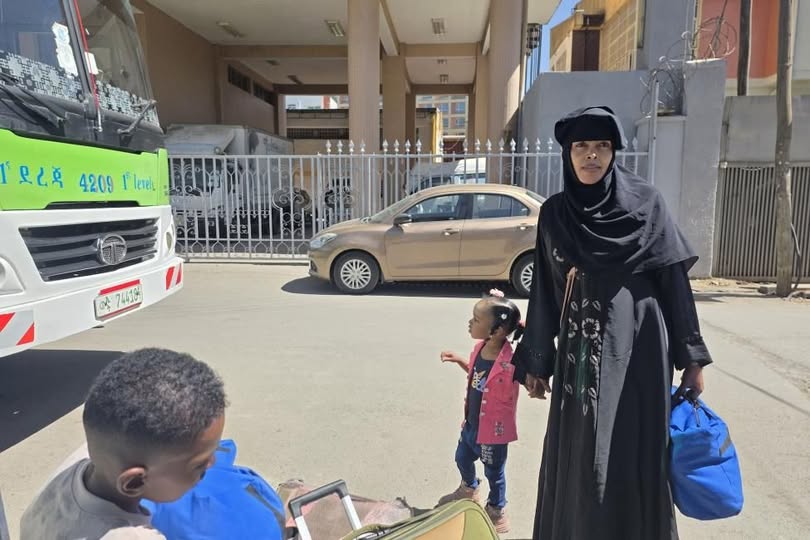
MRM documents that migrant women face heightened risks, including sexual violence, exploitation, forced marriage, and forced labor, in the absence of effective protection mechanisms—particularly within Yemen, a country already suffering from armed conflict and near-total collapse of basic services.
As DG Amy Pope noted:
“Migration along these routes is a shared responsibility, and the 2026 Response Plan aims to protect people on the move and support host communities.”
3. Voluntary Return: A Human Right, Not a Compulsory Solution
MRM stresses that safe and dignified voluntary return, as facilitated by IOM, is a fundamental human right, not a coercive or substitute solution for international protection. Expanding voluntary return and reintegration programs is essential, including the provision of psychosocial and economic support, particularly for women and trafficking survivors.
4. Insufficient Funding and Shared International Responsibility
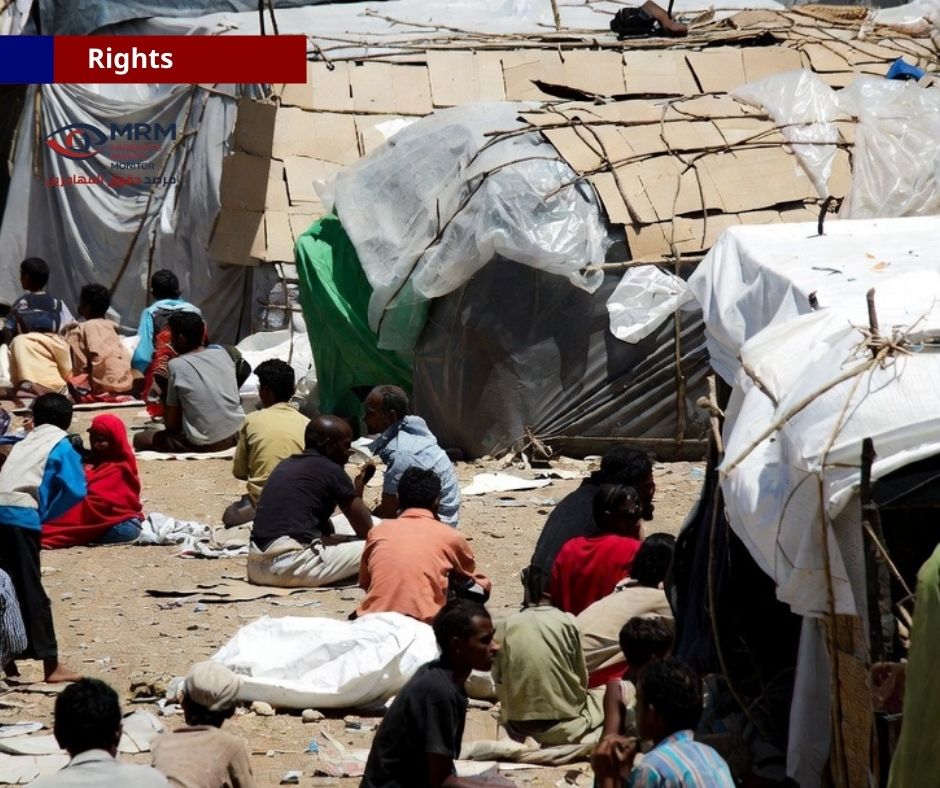
Despite the importance of the USD 91 million allocation, MRM notes that current funding remains insufficient to meet the growing humanitarian needs. IOM warns that without additional resources, life-saving services may be disrupted, and shelters across Ethiopia, Kenya, Somalia, and Djibouti could close, exposing thousands of migrants—especially women, trafficking survivors, and unaccompanied children—to greater risks of violence, exploitation, and preventable death.
5. Demands of Migrants Rights Monitor (MRM)
In light of the above, MRM emphasizes that current humanitarian responses remain inadequate to the scale of the crisis. We call on the international community, donor states, and UN agencies to increase funding for the 2026 Regional Migrant Response Plan, with a clear priority given to the migration route to Yemen, one of the most perilous paths in the world. MRM stresses the need to strengthen legal and humanitarian protection mechanisms for migrants, particularly women and girls, and to ensure accountability for all forms of violence, exploitation, and human trafficking. Voluntary return programs must be expanded under independent international oversight, respecting the principle of non-refoulement and providing psychosocial and economic support to beneficiaries. Furthermore, migrant rights should be systematically integrated into national and regional policies, as a binding legal and ethical obligation, rather than a temporary or seasonal humanitarian response.
The migration route to Yemen is no longer a mere transit path; it represents a human rights crisis that requires urgent international action, going beyond funding appeals to tangible commitments that protect lives and uphold human dignity.


Leave a Reply