Migrants Rights Monitor (MRM) indicates that recent data show significant changes in African migration patterns to Yemen, highlighting the adaptability of smuggling networks in response to intensified security operations along the southern coast. Despite ongoing humanitarian challenges, Yemen remains a major transit point for migrants from the Horn of Africa on their way to the Gulf states.
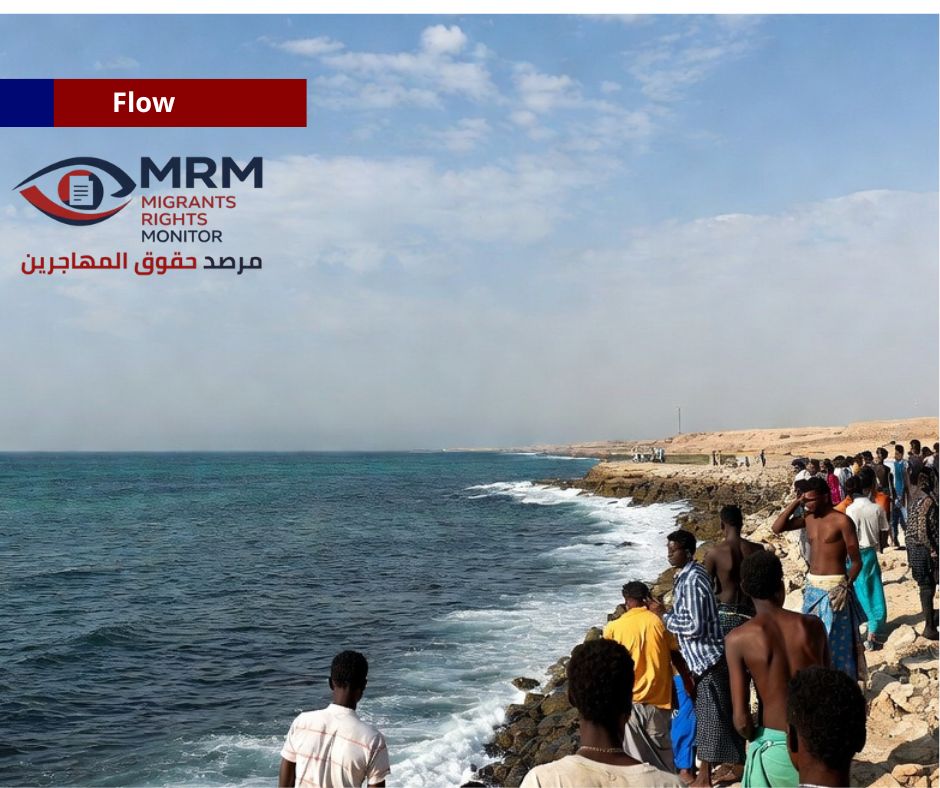
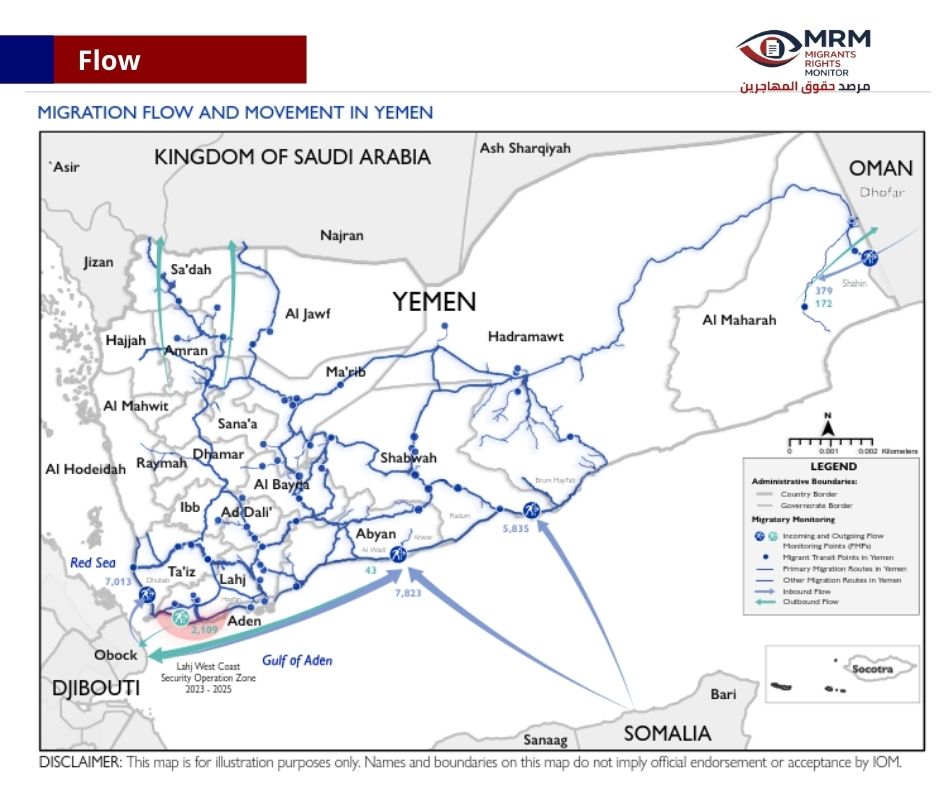
According to data from the International Organization for Migration (IOM), a total of 57,340 migrants arrived in Yemen between October and December 2025, while 5,439 departed during the same period. Most arrivals were male, with 77% aged 18 or older and 13% under 18, while females accounted for 23% of the total flow, including 17% adult women and 7% minors. The majority of arrivals came from Djibouti (68%), reaching various locations within Yemen, particularly the governorates of Taiz, Abyan, and Shabwa, while Somali migrants represented 22%, primarily arriving in Shabwa and Abyan. A smaller proportion, 2%, came from Oman, while 8% of the total flow departed Yemen toward Djibouti.
Field monitoring indicates that these overall movements have geographically shifted in response to intensified anti-smuggling operations. In Ras Al-Arah and Al-Mudharabah districts in Lahj governorate, the Southern Giants Forces launched wide-scale security campaigns targeting human trafficking networks. While these operations aim to disrupt smuggling activities, they have pushed trafficking networks to divert routes north toward Bab al-Mandeb in Taiz governorate or eastward to Abyan and Shabwa. These alternative routes require longer maritime crossings from Djibouti, indicating the networks’ willingness to cover greater distances to evade enforcement measures.
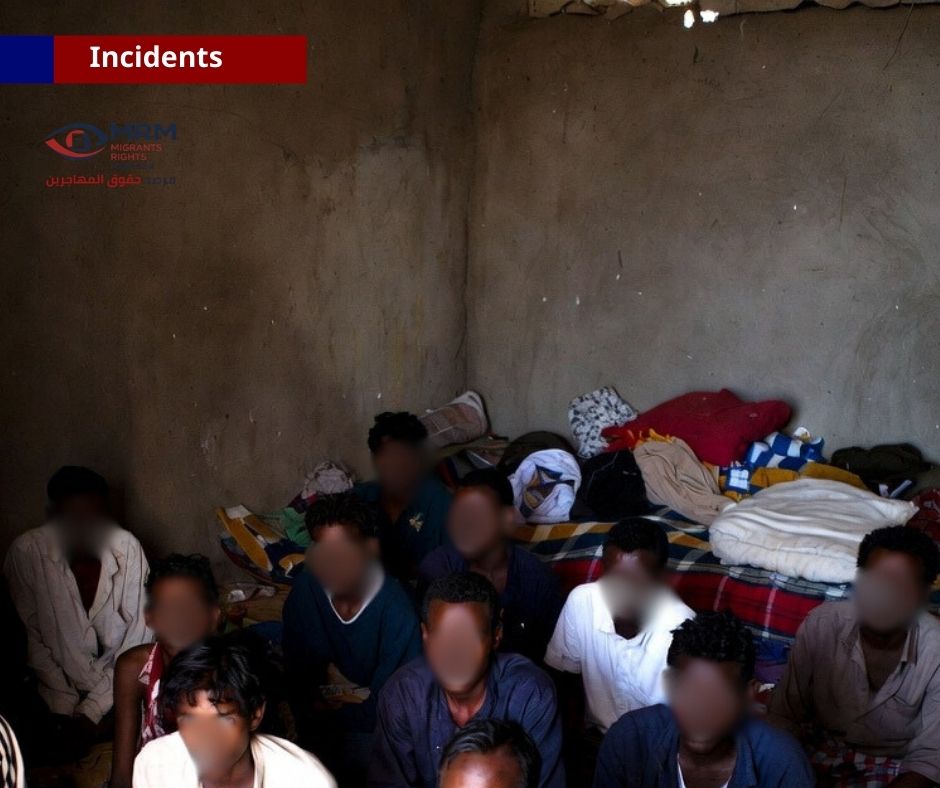
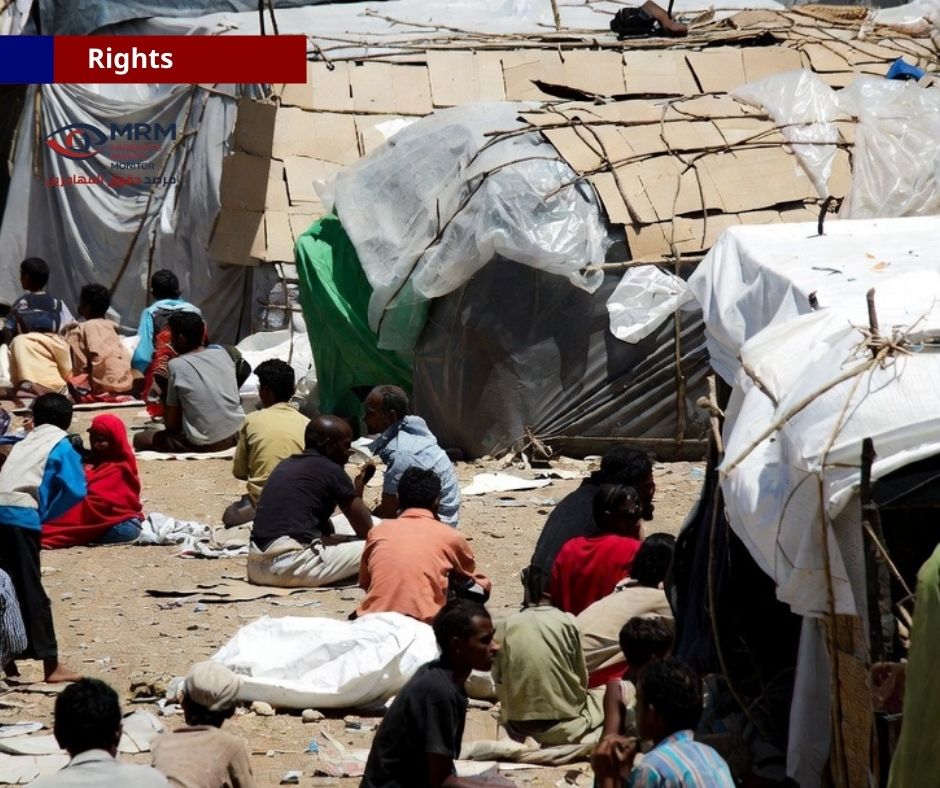
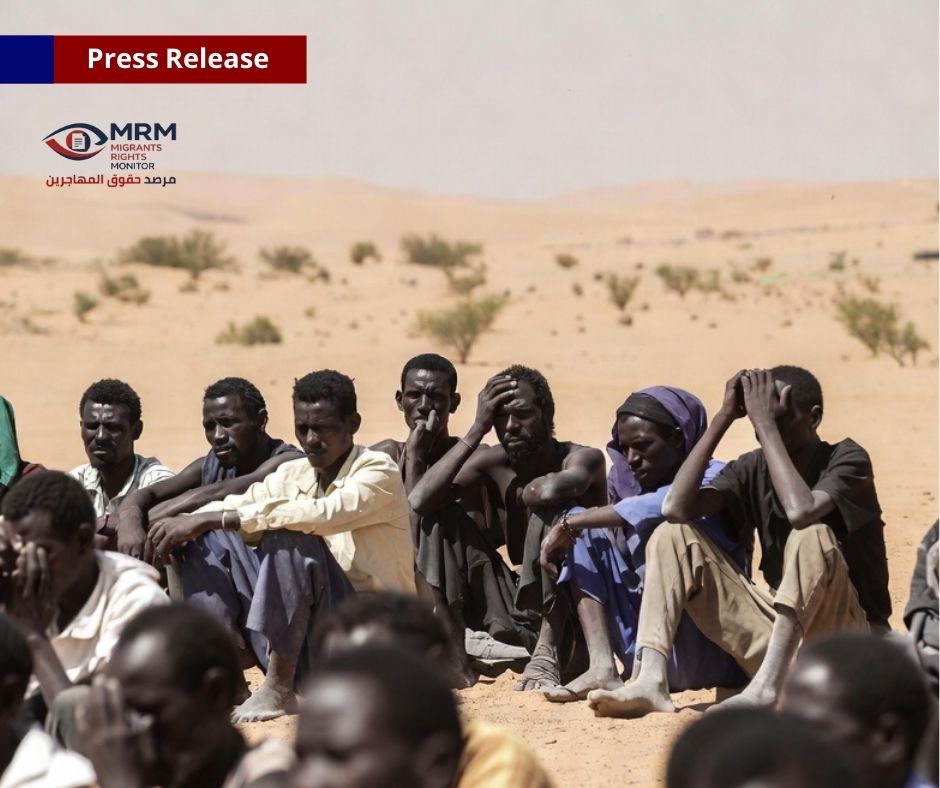
Despite these interventions, migrants face severe risks. Reports indicate that African migrants are subjected to arbitrary detention during anti-smuggling operations. Many spend long hours on overcrowded boats under harsh conditions, resulting in bruises, contusions, and other physical injuries, while facing extreme psychological stress due to fears of drowning, uncertainty, and threats of violence. The most vulnerable groups, particularly women and children, are disproportionately affected, highlighting the urgent need for protection and humanitarian services.
These patterns highlight the dynamic interaction between migration flows and law enforcement measures. While security campaigns may temporarily disrupt transit routes, they do not eliminate smuggling networks; instead, traffickers choose alternative, often longer and more dangerous, routes, increasing the risks faced by migrants. This underscores the need for complementary measures, including safe migration pathways, emergency assistance, and targeted protection for vulnerable populations.
Overall, the data and field observations show that African migration to Yemen is not static, but responds directly to security interventions and regional dynamics. Monitoring these changes remains essential for humanitarian actors, policymakers, and human rights organizations seeking to mitigate the risks faced by migrants along the route to the Gulf.
Sources: International Organization for Migration (IOM), Yemen Migrant Flow Data, October–December 2025; field monitoring of southern coastal migration routes.


Leave a Reply